

- Katılım
- 4 Şub 2022
- Mesajlar
- 8,208
- Beğeni
- 12,341
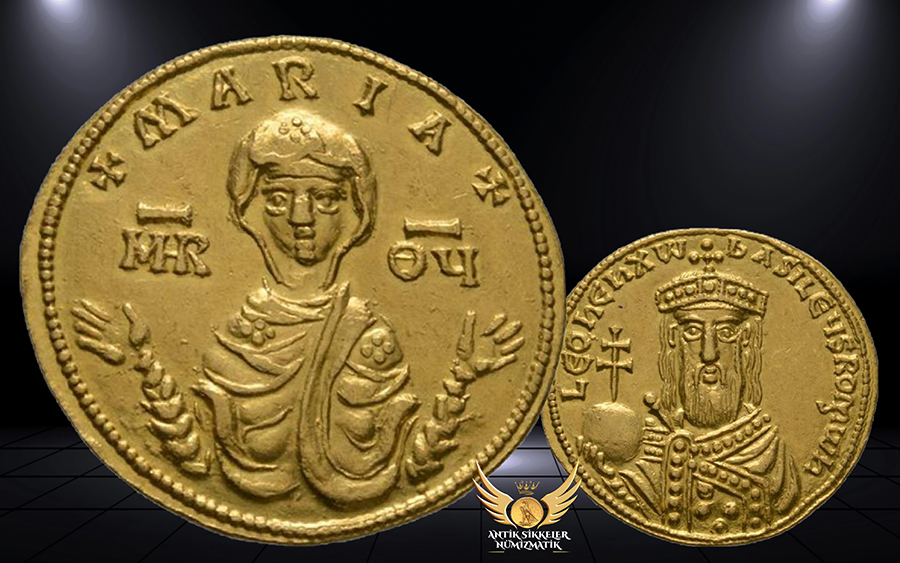
Η ΘΕΟΤΟΚΟΣ ΜΑΡΙΑ - ΠΑΝΑΓΙΑ
Leo was more interested in scholarly work than statesmanship or warfare. He completed Basil’s great work of law which became the standard for the Medieval Byzantine Empire.
Under his reign the last foothold on Sicily, Taormina, was lost to the Arabs. His relations with the Bulgarians turned into a war that led to his defeat in 894 and then to a victory in 895.
In the east he destroyed the army of the Emirate of Tarsus and created new eastern provinces. In his fourth marriage he produced a son as heir. He was succeeded by his brother Alexander, as Constantinus VII was then considered illegitimate, being the son from a fourth marriage.
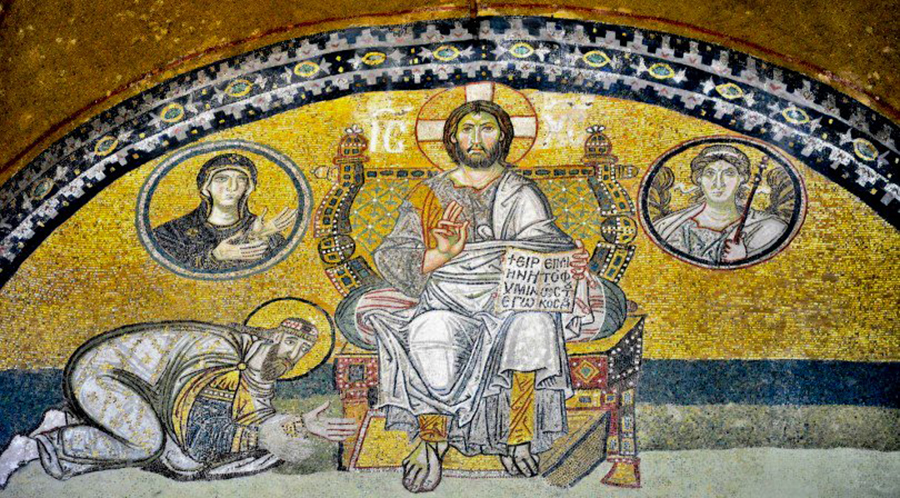
Mosaic of Leo VI Hagia Sophia In this mosaic Leo VI to be performing proskynesis [an act of homage]. Christ is holding a script written; Peace be upon you. I am the light of the world.
Surnamed the Wise or the Philosopher, Leo authored works on various political and theological subjects, but his best known scholarly achievements were his legal treatises and his commission to update and codify Byzantine laws.
The result of these efforts was a 60-book work titled the Basilika [Royal Laws], which provided a timely reinterpretation of Justininian's Corpus Juris Civilis, published over three centuries earlier. The Basilika would serve as the foundation for medieval law in the east.
Leo was more interested in scholarly work than statesmanship or warfare. He completed Basil’s great work of law which became the standard for the Medieval Byzantine Empire.
Under his reign the last foothold on Sicily, Taormina, was lost to the Arabs. His relations with the Bulgarians turned into a war that led to his defeat in 894 and then to a victory in 895.
In the east he destroyed the army of the Emirate of Tarsus and created new eastern provinces. In his fourth marriage he produced a son as heir. He was succeeded by his brother Alexander, as Constantinus VII was then considered illegitimate, being the son from a fourth marriage.
Mosaic of Leo VI Hagia Sophia In this mosaic Leo VI to be performing proskynesis [an act of homage]. Christ is holding a script written; Peace be upon you. I am the light of the world.
Surnamed the Wise or the Philosopher, Leo authored works on various political and theological subjects, but his best known scholarly achievements were his legal treatises and his commission to update and codify Byzantine laws.
The result of these efforts was a 60-book work titled the Basilika [Royal Laws], which provided a timely reinterpretation of Justininian's Corpus Juris Civilis, published over three centuries earlier. The Basilika would serve as the foundation for medieval law in the east.